How to Choose the Right Size Solar System for Your Home in India
Choosing the right solar system for your home is one of the most important decisions you will make before installing rooftop solar. A system that is too small may not deliver the electricity savings you expect, while an oversized system can increase your upfront investment without providing proportional benefits.
For homeowners searching for a solar system in Jaipur, the right system size should be based on more than just the available rooftop area. Your monthly electricity consumption, daytime usage, roof orientation, available shadow-free space, budget, electricity connection, and applicable government regulations all need to be considered.
A professionally designed home solar installation can help you generate clean electricity, reduce dependence on grid power, and potentially lower your long-term electricity costs. The Ministry of New and Renewable Energy (MNRE) also provides Central Financial Assistance (CFA) to eligible residential consumers under the PM Surya Ghar: Muft Bijli Yojana, subject to the applicable scheme rules.
If you are comparing solar panel options in Jaipur, this guide explains how to estimate your ideal system capacity and what factors you should consider before making a decision.
What Size Solar System Does Your Home Actually Need?
Solar system size is generally expressed in kilowatts (kW). It represents the capacity of the solar PV modules and the overall system designed to generate electricity.
For example:
- A 1 kW solar system is suitable for relatively low electricity consumption.
- A 2 kW system can support a home with moderate electricity requirements.
- A 3 kW system is commonly considered for households with higher electricity consumption.
- Homes with larger electricity requirements may need systems above 3 kW, depending on their consumption pattern, roof area, sanctioned load, and applicable regulations.
However, these are only general reference points. There is no universal system size that is perfect for every household.
The best approach is to calculate your electricity requirement first and then design the solar system around your actual consumption.
Read more: How Solar Reduces Business Electricity Bills in India
How to Calculate the Right Solar System Size for Your Home
The simplest starting point is your electricity bill.
Look at your electricity consumption in units (kWh) for the previous 6–12 months. Using several months of data is better than relying on a single bill because electricity consumption can change significantly between summer and winter.
For example, suppose your household uses:
300 units per month
Your approximate annual consumption would be:
300 × 12 = 3,600 units per year
The next step is to determine how much electricity a solar system of a particular capacity can realistically generate at your location.
Solar generation varies based on the following:
- Solar irradiation
- Season
- Panel efficiency
- Roof orientation
- Tilt angle
- Temperature
- Shading
- System losses
- Inverter performance
- Cleaning and maintenance
Therefore, a solar professional should perform a site assessment instead of calculating system size from electricity consumption alone.
Solar System Size Guide Based on Your Electricity Usage
The following table can be used as a starting point, not as a final system-sizing recommendation:
| Approximate Monthly Consumption | Potential Starting Point |
|---|---|
| Up to 100 units | 1 kW |
| 100–200 units | 1–2 kW |
| 200–300 units | 2–3 kW |
| 300–450 units | 3–4 kW |
| 450–600 units | 4–5 kW |
| 600+ units | 5 kW or more |
Actual requirements can differ considerably depending on location, roof conditions, household usage, and the solar generation profile.
For this reason, homeowners should treat this table as an initial reference rather than a technical design.
Why Your Daily Electricity Usage Matters
Your electricity bill tells you how much energy your home currently consumes, but it does not tell you the complete story.
For example, two houses may both consume 300 units per month but have very different electricity usage patterns.
One household may use most electricity during the daytime because someone works from home and appliances such as washing machines, refrigerators, and water pumps are frequently operating.
Another household may use most electricity after sunset because everyone is away during working hours.
This distinction matters because the value of rooftop solar depends partly on when electricity is generated and consumed.
Before selecting a system, consider:
- Monthly electricity consumption
- Daytime electricity usage
- Evening and nighttime consumption
- Seasonal changes in consumption
- Major appliances
- Future electricity requirements
- Existing or planned air conditioners
- Electric vehicle charging
- Water pumps
- Home office equipment
A professional solar assessment can help convert this information into a more practical system recommendation.
Read more: Solar vs Electricity Cost in India
Solar System Size for Different Types of Homes
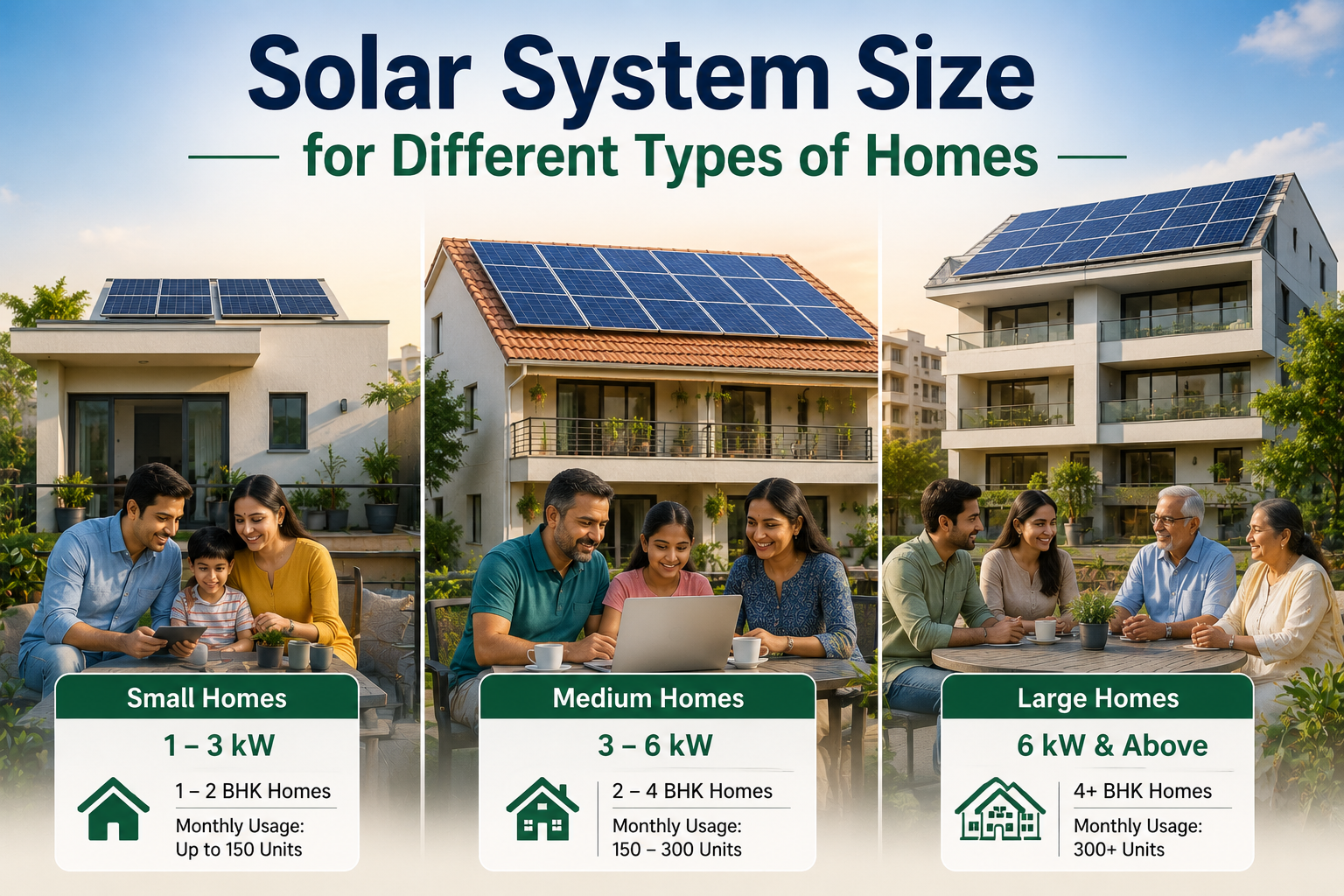
The right solar system size depends primarily on your household's electricity consumption, available rooftop space, daily usage patterns, and future energy requirements. Here is a practical overview of different system capacities:
1. 1 kW Solar System
A 1 kW system may suitable for a small household with relatively low electricity consumption.
It can be considered when the primary objective is to reduce a portion of grid electricity consumption while keeping the initial system size compact.
2. 2 kW Solar System
A 2 kW system can be appropriate for homes with moderate electricity requirements.
It may work well for smaller families using standard household appliances, although the actual capacity should still be determined from electricity consumption and site conditions.
3. 3 kW Solar System
A 3 kW system is often considered by homeowners with moderate-to-high electricity consumption.
It can be particularly relevant for households with appliances that increase electricity demand, such as air conditioners, refrigerators, washing machines, and water pumps.
Under the PM Surya Ghar framework, the current CFA structure provides support for eligible residential systems up to 3 kW, with no additional central subsidy beyond the applicable 3 kW capacity under the cited guidelines.
4. 4 kW, 5 kW or Larger Systems
Larger homes may require systems above 3 kW when electricity consumption is significantly higher.
This could apply to households with:
- Multiple air conditioners
- Electric vehicle charging
- Large water pumps
- Multiple refrigerators/freezers
- Home offices
- High daytime electricity consumption
- Larger families
However, installing a larger system does not automatically mean better savings. The system should be designed according to actual energy requirements and the applicable DISCOM and regulatory conditions.
How Much Roof Space Do You Need?
Roof area is another important factor when choosing the right solar system.
Solar panels require sufficient shadow-free space for installation. The exact space requirement depends on the panel wattage, dimensions, mounting arrangement, setbacks, maintenance access, and site design.
For example, if your home requires a larger system but only has a small usable roof area, a solar installer may need to consider higher-wattage modules or optimize the panel layout.
During a site survey, an installer should evaluate the following:
- Usable rooftop area
- Roof strength and condition
- Direction and tilt
- Shadow from nearby buildings
- Water tanks
- Trees
- Boundary walls
- Existing structures
- Maintenance access
- Panel arrangement
- Cable routing
This is why simply measuring your roof and buying the maximum number of panels available is not a recommended approach.
How Shading Can Affect Your Solar System
Solar panels need adequate exposure to sunlight.
Even partial shading from a water tank, tree, neighboring building, or rooftop structure can affect the performance of a solar array, depending on the system design and how the modules are electrically configured.
For homeowners in Jaipur, where rooftop solar can receive strong sunlight for much of the year, minimizing avoidable shading is particularly important.
A proper site survey should identify shading throughout the day and help determine the most suitable panel placement.
How to Choose the Right Solar Panels for Your Home
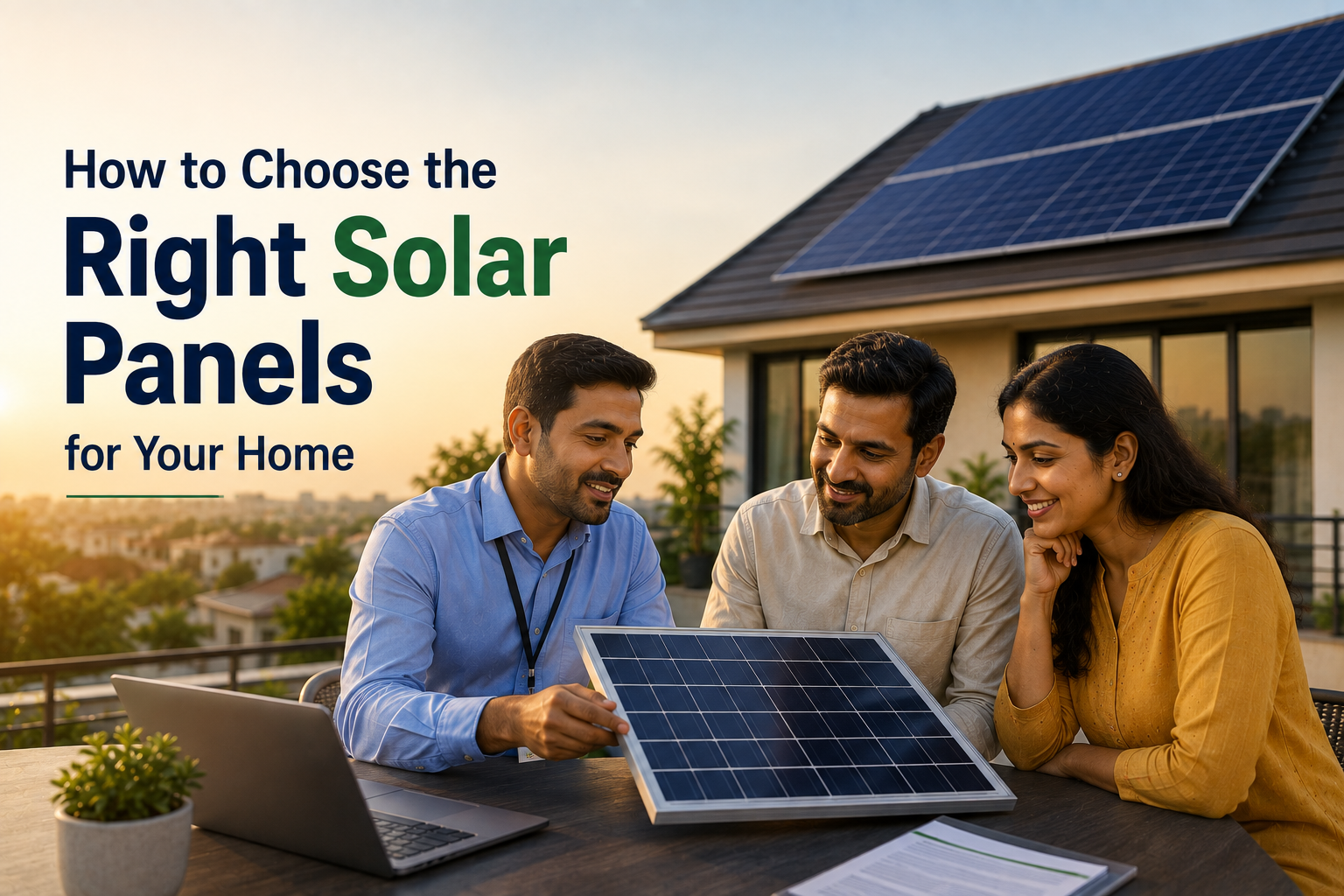
Solar panels are available in different wattages and technologies. Instead of choosing panels only because they have a higher wattage rating, homeowners should evaluate the complete module specification.
Important factors include:
- Module efficiency
- Product warranty
- Performance warranty
- Manufacturer reputation
- Applicable certifications
- Temperature performance
- Degradation characteristics
- Availability of after-sales support
MNRE also maintains applicable lists and updates relating to solar PV modules. For example, the Ministry published an updated ALMM List-I for solar PV modules in July 2026.
For a residential project, it is important to select equipment that meets the applicable requirements for the scheme and installation.
Read more: Which Solar System is Best for Home Use in 2026?
How to Choose the Right Inverter for Your Solar System
The inverter is one of the most important components of a rooftop solar system.
It converts the DC electricity generated by solar panels into AC electricity used by household appliances and compatible with the electrical grid.
When selecting an inverter, consider:
- System capacity
- Panel configuration
- Maximum DC input
- MPPT range
- Efficiency
- Monitoring capabilities
- Warranty
- Installation environment
- Future expansion requirements
The inverter should be selected as part of the overall system design rather than purchased separately based only on the number of panels.
On-Grid, Off-Grid, or Hybrid: Which Solar System Is Right for You?
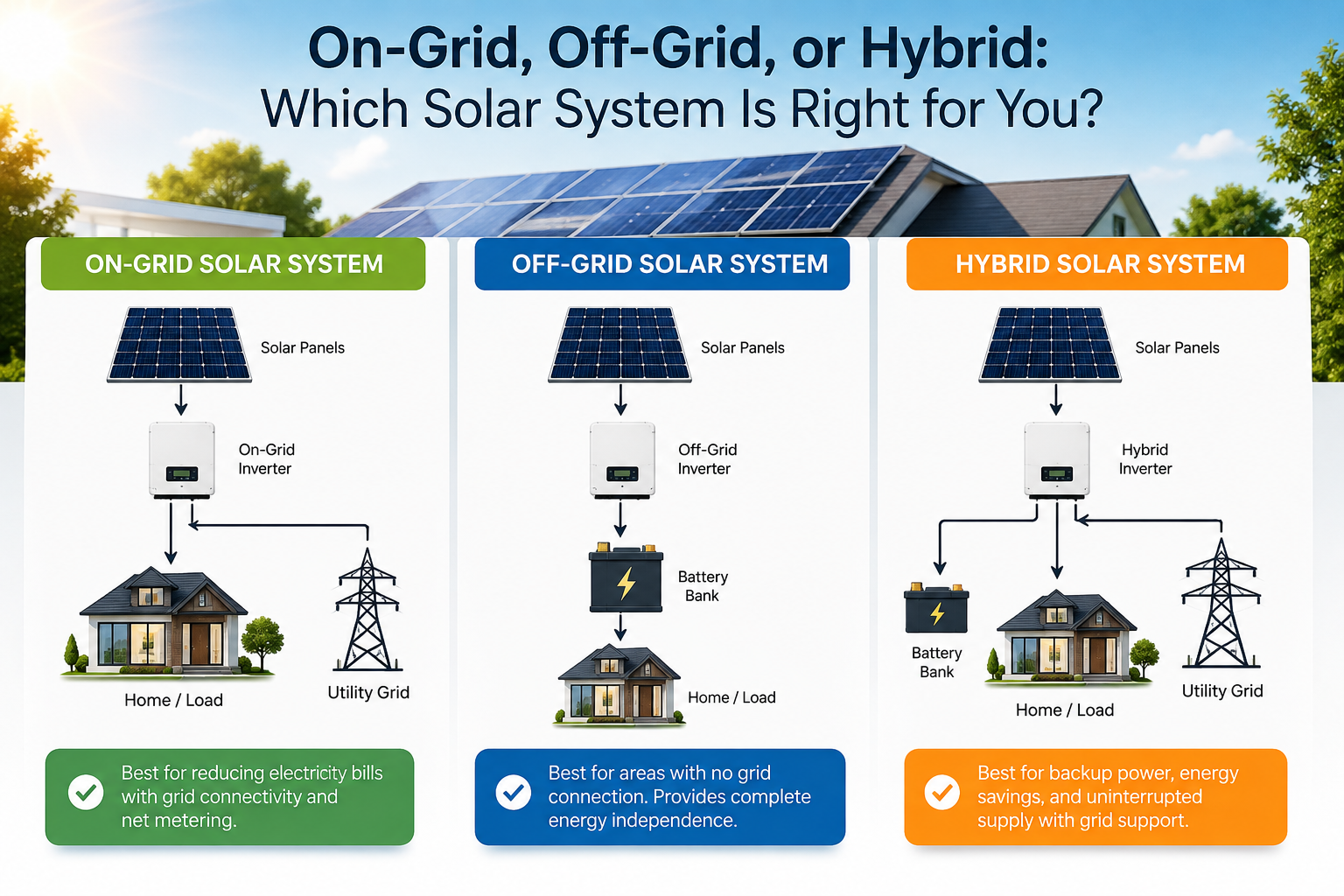
Before installing a solar system, homeowners should understand the difference between common system configurations.
1. On-Grid Solar System
An on-grid system is connected to the electricity grid. Solar power generated by the system can be used by the household, with electricity exchanged with the grid according to the applicable metering and regulatory framework.
This is generally an attractive option for homeowners primarily looking to reduce electricity bills.
2. Off-Grid Solar System
An off-grid system operates independently of the electricity grid and generally requires battery storage.
This type of system may be considered where reliable grid connectivity is unavailable or energy independence is a major priority.
However, the economics and applicable subsidy rules can differ. MNRE's rooftop solar FAQ states that behind-the-meter systems not connected to the grid are not eligible for MNRE subsidy under the referenced rooftop solar framework.
3. Hybrid Solar System
A hybrid system combines solar generation with battery storage and grid connectivity.
It can be useful for homeowners who want backup power while also using solar energy to reduce grid consumption.
The correct option depends on your electricity requirements, backup expectations, and budget.
Read more: How Much Does Solar Panel Installation Cost in Jaipur in 2026?
How PM Surya Ghar Subsidy Can Affect Your Solar Investment
Government incentives can influence the economics of residential rooftop solar.
Under PM Surya Ghar: Muft Bijli Yojana, eligible residential consumers can receive Central Financial Assistance according to the applicable scheme guidelines. The official MNRE documentation indicates CFA support for eligible residential rooftop systems, with the current central subsidy structure extending up to 3 kW.
However, homeowners should not choose their system size solely because of the subsidy.
For example, if your home genuinely requires 5 kW of solar capacity, installing 3 kW only because the subsidy applies up to that level may leave part of your electricity requirement dependent on the grid.
On the other hand, installing substantially more capacity than your consumption requires may increase the investment without delivering equivalent practical benefits.
The right approach is the following:
Calculate consumption → assess roof → determine system size → check applicable subsidy → compare project economics.
What You Should Know About Net Metering in Rajasthan
Net metering can allow eligible rooftop solar consumers to export surplus electricity to the grid according to the applicable state regulations and DISCOM framework.
Rajasthan's rooftop solar framework has historically provided for grid-connected rooftop systems under net metering, subject to technical requirements and the applicable agreement with the DISCOM.
Because electricity regulations, metering arrangements, and procedures can change, homeowners should verify the latest requirements applicable to their connection before finalizing the system.
For a solar system in Jaipur, this makes it important to work with an installer familiar with local DISCOM procedures and residential rooftop solar requirements.
Read more: What is Net Metering and How Does It Work?
How to Choose the Right Solar Solution in Jaipur
If you are searching for solar solutions in Jaipur, do not compare installers only on the basis of the lowest quotation.
A reliable solar provider should be able to explain the following:
- Recommended system capacity
- Expected generation
- Panel specifications
- Inverter specifications
- Mounting structure
- Installation process
- Warranty terms
- Monitoring system
- Maintenance requirements
- Applicable subsidy process
- Grid connectivity and metering requirements
- Estimated financial savings
Ask the installer to explain why the proposed system size has been recommended for your particular home.
A professional quotation should ideally distinguish between equipment, installation, electrical work, approvals, monitoring, and other project components.
Why Professional Home Solar Installation Makes a Difference
Solar installation is not simply a matter of placing panels on a roof.
A complete home solar installation involves planning, electrical design, structural considerations, equipment selection, mounting, wiring, protection systems, inverter installation, testing, and grid-related procedures where applicable.
Professional installation can help reduce common problems such as the following:
- Poor panel positioning
- Unnecessary shading
- Incorrect cable sizing
- Inadequate mounting
- Improper earthing
- Poor waterproofing
- Inverter compatibility issues
- Difficult maintenance access
- Underperforming system design
MNRE's rooftop solar FAQ notes that residential consumers can install rooftop systems through project developers, system integrators, or manufacturers after obtaining the necessary approvals from the relevant DISCOM within applicable capacity limits and state regulations.
How Much Electricity Can Your Solar System Generate?
Solar generation cannot be predicted from system capacity alone.
A 3 kW system installed on two different rooftops may produce different amounts of electricity because of differences in:
- Solar irradiation
- Shading
- Orientation
- Tilt
- Module efficiency
- Temperature
- Dust
- System losses
- Inverter performance
- Maintenance
Therefore, homeowners should be cautious about installers who promise a fixed amount of generation without evaluating the actual property.
A site-specific generation estimate is much more useful than a generic claim.
Read more: How Much Subsidy Can You Get on Rooftop Solar in Rajasthan?
Factors That Can Change Your Ideal Solar System Size
Your current electricity bill is important, but your future electricity needs should also be considered.
Think about whether you plan to add the following:
1. Electric Vehicle
EV charging can significantly increase household electricity consumption. If you are planning to purchase an EV, discuss the expected charging load with your solar installer before finalizing the system.
2. Additional Air Conditioners
Adding another AC can substantially change summer electricity consumption.
3. Electric Water Heater
Electric geysers can contribute considerably to household energy usage, particularly during periods of frequent operation.
4. Home Office
Computers, monitors, networking equipment, and cooling can increase daytime consumption.
5. New Appliances
Kitchen appliances, washing machines, refrigerators, and water pumps can gradually increase household demand.
Planning for realistic future consumption can help avoid installing an undersized system.
Common Mistakes to Avoid When Buying Solar Panels in Jaipur
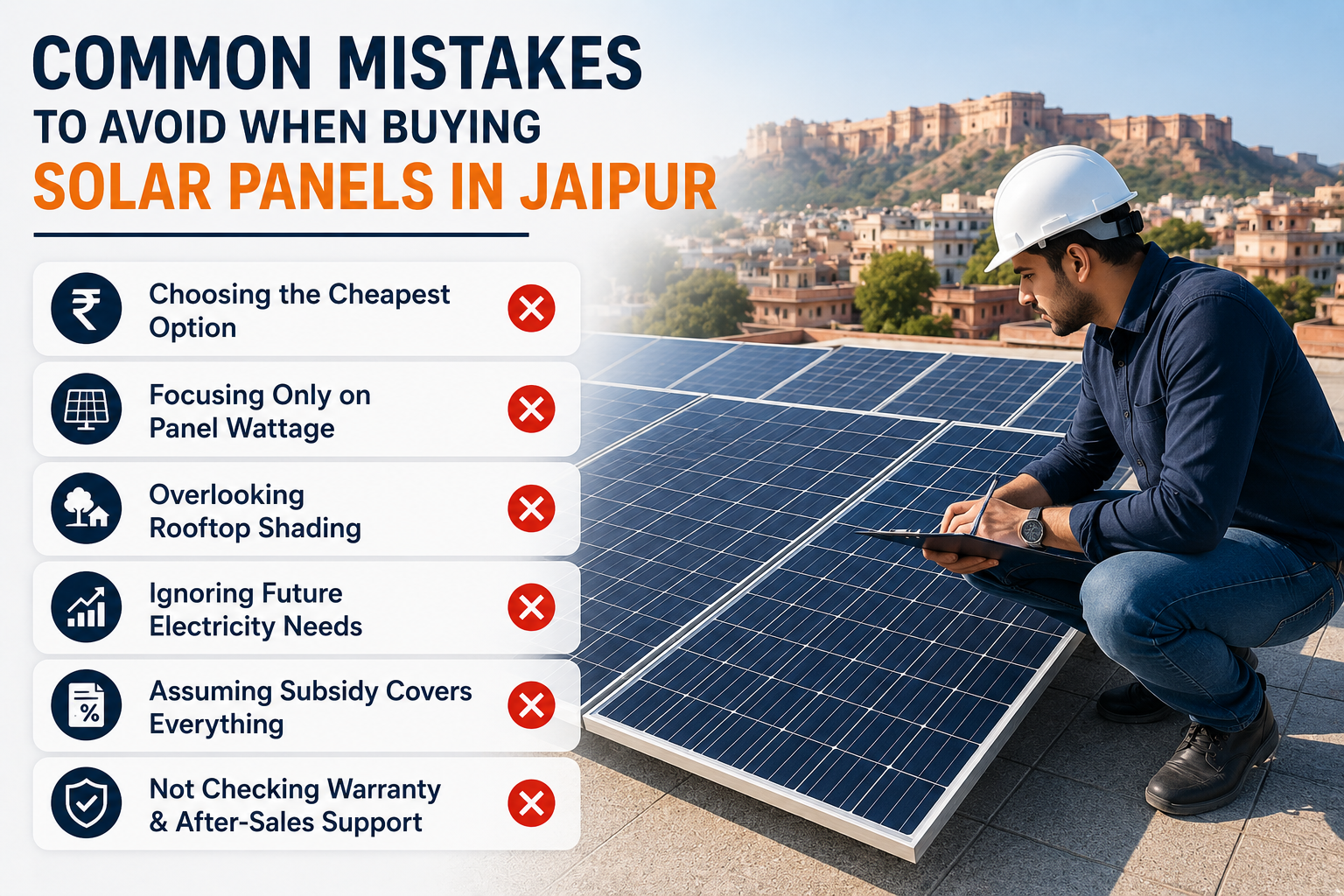
Choosing the right solar panel in Jaipur involves more than comparing prices. Since a solar system is a long-term investment, homeowners should look at equipment quality, expected performance, warranties, installation standards, and after-sales support before making a decision.
1. Choosing the Cheapest Solar Quotation
The lowest quotation is not always the best solar solution. A cheaper system may use different equipment specifications, installation practices, or warranty terms.
Before making a decision, compare the panel and inverter specifications, mounting structure, installation quality, warranties, expected generation, and after-sales support.
2. Focusing Only on Solar Panel Wattage
A higher-wattage panel does not automatically mean a better solar system. The overall system should be evaluated as a combination of panels, an inverter, a mounting structure, electrical components, and installation quality.
Choose panels based on efficiency, dimensions, warranty, performance, manufacturer reliability, and compatibility with the overall system design.
3. Overlooking Rooftop Shading
A rooftop may appear sunny at certain times of the day but experience shading during other hours. Trees, water tanks, nearby buildings, boundary walls, and other structures can affect solar generation.
Before installation, make sure the installer assesses potential shading and plans the panel layout accordingly.
4. Ignoring Your Future Electricity Needs
Your current electricity consumption may not remain the same. If you are planning to purchase an electric vehicle, install another air conditioner, add a water pump, or increase your use of electric appliances, your future electricity requirement could be higher.
Discuss these expected changes with your installer before finalizing the solar system size.
5. Assuming the Subsidy Covers the Entire Project Cost
Government subsidy can reduce the eligible cost of a residential solar installation, but it does not necessarily cover the entire project cost.
Always check the latest PM Surya Ghar scheme guidelines, eligibility requirements, applicable subsidy amount, and other project costs before making a purchase decision.
6. Not Checking Warranty and After-Sales Support
Solar equipment is designed for long-term use, so warranty and service support should be part of your buying decision.
Before purchasing, ask the installer for clear information about:
- Solar panel product warranty
- Solar panel performance warranty
- Inverter warranty
- Mounting structure warranty
- Installation workmanship
- Service and maintenance support
- Replacement or repair procedures
A transparent warranty and reliable after-sales service can make a significant difference to your long-term solar experience.
A Simple Step-by-Step Way to Choose Your Solar System
You can use this process as a starting framework:
Step 1: Check your average monthly electricity consumption.
Step 2: Review your last 6–12 months of electricity bills.
Step 3: Identify your daytime electricity usage.
Step 4: Consider future loads such as EVs, ACs, and electric appliances.
Step 5: Assess usable, shadow-free rooftop space.
Step 6: Evaluate roof orientation and installation conditions.
Step 7: Determine the appropriate system capacity with a qualified installer.
Step 8: Check applicable subsidy and DISCOM requirements.
Step 9: Compare equipment, warranties, and installation quality.
Step 10: Select a solar provider that can support installation and after-sales service.
Why Jaipur Homeowners Should Consider Rooftop Solar
Jaipur receives substantial solar exposure, making rooftop solar an attractive option for many residential properties.
However, good solar performance depends on proper system design rather than sunlight alone.
A well-designed residential solar system can help homeowners:
- Generate renewable electricity
- Reduce dependence on grid electricity
- Manage long-term electricity expenses
- Make better use of available rooftop space
- Reduce their household carbon footprint
The financial outcome depends on system cost, electricity consumption, generation, tariffs, maintenance, and applicable incentives.
Read more: How Much Does Solar Panel Installation Cost in Jaipur in 2026?
Conclusion
Choosing the right solar system in Jaipur is ultimately about finding the right balance between electricity consumption, rooftop potential, system cost, and long-term energy requirements.
Instead of asking only, "How many solar panels can I fit on my roof?" ask:
"What solar system capacity is appropriate for my home's electricity consumption and future needs?"
That approach can help you avoid both an undersized system that fails to meet your expectations and an oversized system that unnecessarily increases your investment.
If you are considering solar panels in Jaipur for your home, a professional site assessment is the next practical step. EGPS can help homeowners evaluate their requirements and explore suitable residential solar solutions through a professionally planned home solar installation.
Ready to find the right solar system for your home? Explore EGPS residential solar panel installation services to discuss your electricity requirements, rooftop conditions, and suitable solar system options.
Frequently Asked Questions
1. How do I choose the right solar system size for my home?
The right solar system size depends on your monthly electricity consumption, available rooftop space, daytime energy usage, shading, and future electricity needs. Reviewing your last 6–12 months of electricity bills is a good starting point.
2. How many solar panels do I need for my home?
The number of panels depends on the total system capacity and the wattage of the panels selected. For example, a 3 kW system can use different numbers of panels depending on whether the modules are 400 W, 500 W, or higher.
3. Is a 3 kW solar system enough for a home?
A 3 kW system can be suitable for many homes with moderate electricity consumption, but the ideal capacity depends on your actual usage. Homes with multiple ACs, EV charging, or other high-load appliances may require a larger system.
4. How much rooftop space is required for a solar system?
The required space depends on the system capacity, panel size, mounting arrangement, and rooftop layout. A professional site survey can determine the usable, shadow-free area available for installation.
5. Is solar panel installation worth it in Jaipur?
Solar can be a practical option for many Jaipur homeowners because rooftop systems can generate electricity from sunlight and help reduce dependence on grid electricity. Your actual savings will depend on system cost, electricity consumption, generation, tariffs, and applicable incentives.
6. What should I check before buying solar panels in Jaipur?
Compare panel efficiency, manufacturer reputation, inverter specifications, warranties, installation quality, mounting structure, expected generation, subsidy eligibility, and after-sales support rather than choosing an installer based only on price.
7. Can I install solar panels if my roof has some shade?
Yes, solar installation may still be possible, but shading should be properly assessed before installation. Trees, water tanks, buildings, and other rooftop structures can affect solar generation, so panel placement should be planned carefully.
8. Can I increase my solar system capacity in the future?
In some cases, a system can be expanded, but this depends on the inverter capacity, available roof space, electrical infrastructure, and the original system design. If you expect your electricity consumption to increase, discuss future expansion with your installer beforehand.
9. Does the government provide a subsidy for residential solar systems?
Eligible residential consumers can receive Central Financial Assistance under the PM Surya Ghar: Muft Bijli Yojana, subject to the latest government guidelines and eligibility conditions. The applicable subsidy should be verified before purchasing the system.
10. How can I choose the right solar company in Jaipur?
Look for a solar company that provides transparent quotations, quality equipment, professional installation, clear warranties, subsidy and documentation assistance, system monitoring, and reliable after-sales support. A proper site assessment should also be completed before recommending a solar system in Jaipur.