How Much Subsidy Can You Get on Rooftop Solar in Rajasthan? Complete 2026 Guide

How Much Subsidy Can You Get on Rooftop Solar in Rajasthan? Complete 2026 Guide
Thinking about installing rooftop solar in Rajasthan but worried about the upfront cost? You may be able to reduce your investment significantly with government support.
Under the PM Surya Ghar: Muft Bijli Yojana, eligible residential consumers can receive Central Financial Assistance (CFA) for installing grid-connected rooftop solar systems, with the current central subsidy offering up to ₹78,000 for an eligible 3 kW or larger system.
For homeowners in Jaipur and across Rajasthan, understanding the solar subsidy Rajasthan residents may qualify for can help you estimate your actual solar investment and make a more informed decision.
But how much subsidy can you really get for a 1 kW, 2 kW, or 3 kW system? Is additional support available from the Rajasthan government? How does net metering affect your electricity savings? And what solar system size is right for your home?
In this complete 2026 guide, we break down the subsidy amounts, eligibility requirements, application process, net metering, system costs, and key factors to consider before investing in rooftop solar in Rajasthan.
How Much Solar Subsidy Is Available in Rajasthan in 2026
Planning to install rooftop solar in Rajasthan? The good news is that eligible homeowners can receive up to ₹78,000 in central subsidy under the PM Surya Ghar: Muft Bijli Yojana. The exact amount depends on the capacity of your rooftop solar system.
Here is the current subsidy structure for eligible residential consumers:
| Solar System Capacity | Maximum Central Subsidy |
|---|---|
| 1 kW | ₹30,000 |
| 2 kW | ₹60,000 |
| 3 kW | ₹78,000 |
| Above 3 kW | Maximum ₹78,000 |
The subsidy is calculated at ₹30,000 per kW for the first 2 kW and ₹18,000 for the additional 1 kW. Any solar capacity installed beyond 3 kW does not receive additional central subsidy under the standard residential CFA structure.
For example, if you install a 3 kW rooftop solar system, you may be eligible for the maximum central subsidy of ₹78,000. If you choose a 5 kW system, the central subsidy can still be capped at ₹78,000, provided you meet all applicable eligibility and installation requirements.
This means the right solar system size should not be chosen based on the subsidy alone. Your monthly electricity consumption, available rooftop space, future power requirements, and expected solar generation should also be considered.
Read more: How Solar Reduces Business Electricity Bills in India
What Is the PM Surya Ghar Rooftop Solar Subsidy Scheme
The PM Surya Ghar Muft Bijli Yojana is a Government of India initiative designed to increase rooftop solar adoption among residential electricity consumers.
The scheme aims to help households generate electricity from solar energy and reduce their dependence on grid electricity. The government has set a national target of installing rooftop solar systems in one crore households.
Rajasthan is an important state under the program. According to the Rajasthan Government's 2025-26 Economic Review, the state had installed approximately 493 MW of rooftop solar capacity for 1.22 lakh consumers by December 2025, with a target of installing rooftop solar systems in 5 lakh houses.
The program also provides an online process for registration, approvals, and subsidy disbursement.
How Is Solar Subsidy Calculated for 1 kW, 2 kW and 3 kW Systems
Wondering how the rooftop solar subsidy is actually calculated? The amount is determined by the eligible solar capacity installed, rather than being a fixed percentage of your total installation cost.
Under the PM Surya Ghar: Muft Bijli Yojana, the Central Financial Assistance (CFA) for eligible residential consumers is structured around the first 3 kW of installed capacity.
How the Subsidy Works
The calculation is straightforward:
- First 1 kW: ₹30,000 subsidy
- Next 1 kW: ₹30,000 additional subsidy
- Next 1 kW: ₹18,000 additional subsidy
- Capacity above 3 kW: No additional central subsidy
This means the maximum central subsidy reaches ₹78,000 at 3 kW.
Example: 1 kW Solar System
If you install an eligible 1 kW rooftop solar system, the applicable central subsidy can be up to ₹30,000.
Example: 2 kW Solar System
For an eligible 2 kW system, the subsidy can reach:
₹30,000 + ₹30,000 = ₹60,000
Example: 3 kW Solar System
For an eligible 3 kW system, the calculation becomes:
₹30,000 + ₹30,000 + ₹18,000 = ₹78,000
This is the maximum central CFA available under the standard residential structure.
What Happens If You Install More Than 3 kW?
Installing a larger system can still make sense if your household has higher electricity consumption. However, the central subsidy does not continue increasing after 3 kW.
For example, an eligible homeowner installing a 5 kW system may still receive a maximum central CFA of ₹78,000. The additional 2 kW can increase your solar generation capacity, but it does not increase the central subsidy.
The official scheme structure provides CFA at 60% of the applicable benchmark cost for the first 2 kWp and 30% for the additional 1 kWp. No additional central CFA is provided for capacity beyond 3 kWp.
Therefore, when choosing between a 2 kW, 3 kW, 4 kW, or 5 kW system, consider your electricity consumption, rooftop space, future energy requirements, and expected solar generation rather than choosing a system based only on the subsidy amount.
Read more: How Much Does Solar Panel Installation Cost in Jaipur in 2026?
Can You Get an Additional Solar Subsidy from the Rajasthan Government
This is where homeowners need to be careful.
The central PM Surya Ghar subsidy should not automatically be confused with every solar-related incentive or state program available in Rajasthan.
The Rajasthan Government's Economic Review states that consumers under the state's 150 Units per Month Nishulk Bijli Yojana who install rooftop solar through the PM Surya Ghar National Portal can receive Central Financial Assistance from MNRE along with an additional state subsidy of ₹17,000.
This does not mean every residential solar customer in Rajasthan automatically receives ₹17,000 in addition to the ₹78,000 central subsidy. Eligibility for additional state support depends on the applicable Rajasthan scheme and consumer eligibility.
Therefore, before calculating your final solar investment, it is important to check which subsidy or financial assistance applies to your specific electricity connection.
How Much Does a 3 kW Solar System Cost After a Subsidy?
Suppose a homeowner in Jaipur is eligible for the full PM Surya Ghar subsidy and installs a 3 kW rooftop solar system.
The maximum central subsidy can be:
₹78,000
If the total project cost before subsidy were, for example, ₹1,80,000, the simplified calculation would be:
₹1,80,000 − ₹78,000 = ₹1,02,000
The actual amount payable will depend on the quoted system price, applicable taxes, installation specifications, DISCOM-related requirements, financing, and other project costs.
Therefore, consumers should not treat ₹1,80,000 as a universal 3 kW installation price. Solar prices can vary significantly depending on module technology, inverter, mounting structure, electrical work, warranty, installation conditions, and other components.
Read more: Which Solar System is Best for Home Use in 2026?
Who Is Eligible for Rooftop Solar Subsidy in Rajasthan
The PM Surya Ghar CFA is primarily designed for eligible residential electricity consumers.
The scheme guidelines specifically state that CFA is available for the residential sector and that non-residential segments such as commercial and industrial consumers are not eligible for this residential CFA.
Before applying, homeowners should verify their eligibility and ensure that their installation follows the applicable scheme and DISCOM requirements.
Eligibility can involve factors such as:
- Having an eligible residential electricity connection
- Installing an eligible grid-connected rooftop solar system
- Using the prescribed application process
- Selecting an eligible vendor through the applicable portal
- Completing the required inspection and commissioning process
- Meeting applicable technical and DISCOM requirements
- Providing correct consumer and banking information for subsidy processing
Because scheme procedures can change, applicants should always verify the latest requirements on the official PM Surya Ghar portal before submitting an application.
How to Apply for Solar Subsidy in Rajasthan: Step-by-Step Process
Getting the subsidy is not simply a matter of buying solar panels and requesting money from the government.
The installation generally involves several connected steps.
Step 1: Check Your Electricity Connection
Start by checking your electricity connection, sanctioned load, monthly electricity consumption, and DISCOM requirements.
This helps determine whether rooftop solar is suitable for your property and what system capacity may be appropriate.
Step 2: Register on the PM Surya Ghar Portal
Eligible residential consumers can begin the application process through the official PM Surya Ghar system.
The government provides an online process for registration, approvals, and subsidy disbursement.
Step 3: Select an Eligible Solar Vendor
After the application process, homeowners can select a suitable vendor from the applicable vendor network.
Choosing the right installer is important because the quality of panels, inverter, mounting structure, electrical protection, installation, and after-sales support can directly affect the performance of your system.
Step 4: Install the Rooftop Solar System
The installation generally includes:
- Solar PV modules
- Solar inverter
- Mounting structure
- DC and AC cables
- Protection devices
- Earthing
- Electrical connections
- Monitoring equipment
- Required metering infrastructure
Step 5: Inspection and Commissioning
After installation, the system may need to undergo the applicable inspection and commissioning process through the relevant DISCOM procedures.
This stage is important because subsidy processing is connected with successful completion of the required installation and commissioning formalities.
Step 6: Subsidy Disbursement
Once the required conditions are fulfilled, the eligible subsidy is processed through the applicable government mechanism.
The official PM Surya Ghar consumer portal provides functionality for registration, application, and subsidy-related processing.
Read more: How to Apply for a Solar Subsidy in India
What Is Net Metering and How Does It Work With Rooftop Solar
Installing solar panels can reduce the amount of electricity you purchase from the grid, but what happens when your rooftop solar system generates more electricity than your home is using? This is where net metering becomes important.
For homeowners exploring solar solutions India can use to manage electricity costs, net metering allows a grid-connected rooftop solar system to work together with the electricity grid.
How Does Net Metering Work?
During the day, your solar panels generate electricity. Your home uses this electricity first for appliances and other connected loads.
If your solar system produces more electricity than your home is consuming at that moment, the excess electricity can be exported to the grid through the applicable metering arrangement.
When your solar system is not generating enough electricity, such as at night or during periods of low sunlight, your home can draw electricity from the grid.
A bidirectional meter records the electricity flowing between your home and the grid according to the applicable regulations.
Simple Example of Net Metering
Suppose your rooftop solar system generates 20 units of electricity during the day, while your home uses 14 units during that period.
The remaining 6 units may be exported to the grid, subject to the applicable net-metering rules.
Later, when your solar system is not generating electricity, your home can draw power from the grid.
The applicable billing mechanism then accounts for the electricity imported from and exported to the grid according to the prevailing regulations and metering arrangement.
Why Is Net Metering Important for Rooftop Solar?
Net metering can make a grid-connected rooftop solar system more useful because electricity generated by your panels does not have to be consumed at the exact moment it is produced.
It can help you:
- Make better use of excess solar generation
- Reduce dependence on grid electricity
- Track electricity exported to the grid
- Potentially lower your electricity bills, depending on applicable regulations and consumption
- Use your rooftop solar system more efficiently
What Role Does the DISCOM Play?
Net metering is connected to your local electricity distribution company, or DISCOM. Depending on the applicable process, the project may involve application, approval, meter installation or replacement, inspection, and commissioning.
This means rooftop solar is more than simply installing panels on your roof. A complete grid-connected project may involve:
Solar system installation + DISCOM approval + net metering + inspection + commissioning + subsidy assistance
For homeowners, working with an experienced installer that can guide you through the applicable DISCOM and net-metering process can help make the overall solar installation smoother.
Before starting your project, always confirm the latest net-metering rules and procedures applicable to your electricity connection.
Read more: What is Net Metering?
What Size Solar System Do You Need for Your Home
The right system size depends on your electricity consumption rather than simply choosing the largest system eligible for subsidy.
For example:
- A smaller household with relatively low consumption may find a 1 kW or 2 kW system suitable.
- A medium-consumption home may consider a 3 kW system.
- A larger home with higher electricity consumption may require 4 kW, 5 kW, or more.
However, the optimal capacity should be evaluated using your actual electricity bills, available rooftop area, electricity consumption pattern, sanctioned load, and applicable DISCOM requirements.
Installing more capacity solely because additional panels are available may not always be the most economical decision.
Why Is 3 kW a Popular Choice for Residential Solar
For many homeowners researching solar subsidies in Rajasthan, 3 kW is an important capacity because the maximum central CFA reaches ₹78,000 at this level.
However, that does not mean every homeowner should install exactly 3 kW.
For example, if your household electricity consumption is low, a 2 kW system may be more appropriate.
On the other hand, if your electricity consumption is high, a 4 kW or 5 kW system could make more sense even though the central subsidy remains capped at ₹78,000.
The decision should therefore be based on energy requirements first and subsidy second.
What Factors Affect Your Rooftop Solar Installation Cost?
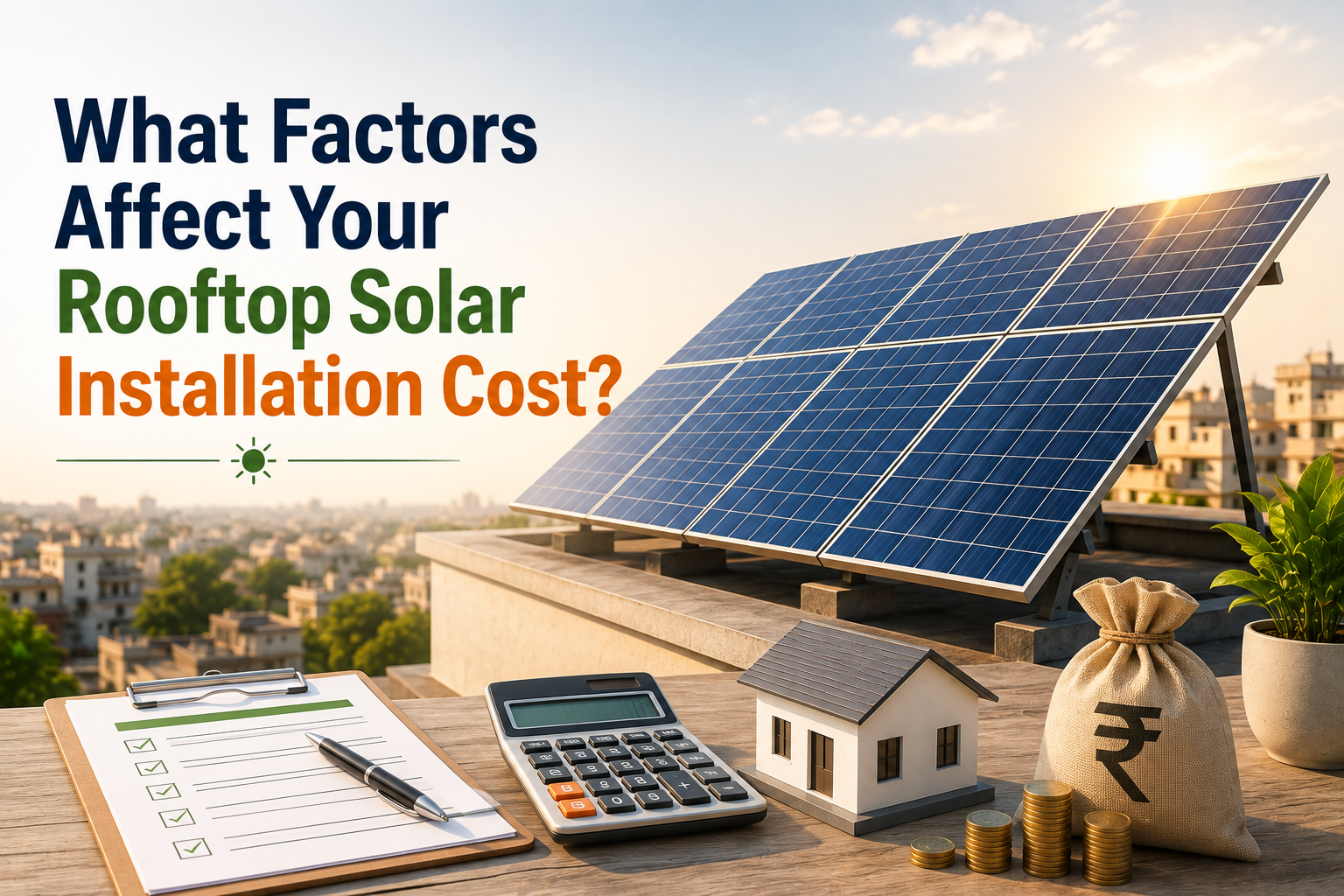
The subsidy is only one part of the total financial calculation.
Your final solar installation cost can vary depending on:
- Solar Panel Technology: Different modules have different efficiency levels, warranties, and performance characteristics.
- Inverter: The inverter converts the electricity generated by the panels into usable AC electricity for your home and plays an important role in system performance.
- Mounting Structure: The rooftop structure must be appropriate for the roof type, panel configuration, wind conditions, and installation requirements.
- Electrical Work: Cabling, protection devices, earthing, and other electrical components contribute to the project cost.
- Rooftop Conditions: A complicated rooftop, shading, limited space, or difficult installation access can affect installation requirements.
- System Capacity: A 5 kW system will naturally require more equipment than a 2 kW system.
- After-Sales Service: Warranty handling, system monitoring, maintenance, and technical support can influence the long-term value of the installation.
For this reason, homeowners should compare complete quotations rather than choosing a solar company only because it offers the lowest initial price.
Why Is Rooftop Solar Growing in Rajasthan
Rajasthan has enormous solar energy potential, and rooftop solar can be particularly useful for households looking to reduce their dependence on conventional grid electricity.
The state's rooftop solar program is already expanding. The Rajasthan government reported approximately 493 MW of rooftop solar capacity installed across 1.22 lakh consumers by December 2025 under PM Surya Ghar.
Jaipur is also among the leading districts in Rajasthan for installed rooftop solar capacity. The state's Economic Review reported Jaipur at approximately 110,627 kW of installed rooftop solar capacity as of December 2025.
This growing adoption reflects increasing consumer interest in renewable energy, electricity-bill savings, and government-supported rooftop solar programs.
How to Choose the Right Solar Energy Company in Jaipur
Choosing the right solar energy company in Jaipur is just as important as understanding the subsidy.
Before finalizing an installer, check:
1. Vendor Eligibility
Confirm that the vendor is eligible under the applicable PM Surya Ghar program and follows the required process.
2. Product Specifications
Ask for the exact make and model of:
- Solar panels
- Inverter
- Mounting structure
- Protection equipment
- Cables and electrical components
3. Warranty
Understand both product warranties and installation-related warranties.
4. Installation Scope
Your quotation should clearly explain what is included in the installation.
5. Net Metering Assistance
Ask whether the company supports the required DISCOM and net-metering process.
6. Subsidy Assistance
A professional installer should explain the applicable subsidy process without promising an amount that you are not actually eligible to receive.
7. Post-Installation Support
Solar is a long-term investment, so technical support after commissioning matters.
Read more: What Documents Are Required for Solar Subsidy in Rajasthan?
5 Common Mistakes to Avoid When Applying for Solar Subsidy
Getting a rooftop solar subsidy can make your investment more affordable, but a few common mistakes can lead to confusion, delays, or unexpected costs. Before installing solar, make sure you avoid these five mistakes.
Mistake 1: Assuming Every Customer Gets the ₹78,000 Subsidy
One of the most common misunderstandings is assuming that every person installing rooftop solar automatically receives ₹78,000.
The ₹78,000 is the maximum central CFA available to eligible residential consumers under the applicable PM Surya Ghar structure for systems reaching 3 kW. The actual subsidy depends on your eligibility, installed capacity, and completion of the required process.
Before calculating your final solar investment, confirm the subsidy amount applicable to your specific installation.
Mistake 2: Choosing a Solar System Only to Get the Maximum Subsidy
A higher-capacity system does not automatically mean a better investment.
For example, installing a 3 kW system can make you eligible for the maximum central CFA, but that does not mean every household needs 3 kW. Similarly, a 5 kW system may be more suitable for a home with significantly higher electricity consumption, even though the central subsidy remains capped.
Consider your monthly electricity usage, rooftop space, shading, sanctioned load, and future energy requirements before deciding on system capacity.
Mistake 3: Choosing a Solar Company Based Only on the Lowest Price
The cheapest quotation is not always the most cost-effective option.
Two solar quotations may have different panel technologies, inverter brands, mounting structures, warranties, electrical components, installation standards, and after-sales services.
Before choosing an installer, compare:
- Solar panel specifications
- Inverter make and model
- Product and performance warranties
- Mounting structure quality
- Electrical protection and earthing
- Installation scope
- Net-metering assistance
- Subsidy-related support
- After-sales service
A slightly higher upfront cost may provide better long-term value if the system uses reliable components and includes stronger installation and service support.
Mistake 4: Ignoring Net Metering and DISCOM Requirements
Installing solar panels is only one part of a grid-connected rooftop solar project.
You may also need to complete the applicable DISCOM approvals, metering, inspection, and commissioning procedures.. Ignoring these requirements can create unnecessary delays and confusion during the installation process.
Before finalizing your project, ask your installer who will handle the applicable net-metering and DISCOM-related process and what documentation you will need to provide.
Mistake 5: Relying on Outdated Solar Subsidy Information
Government subsidy amounts, eligibility conditions, application procedures, and state-level programs can change.
Information found on an old blog, social media post, or outdated quotation may not reflect the current rules.
Before making a financial decision, verify the latest information through the official PM Surya Ghar portal, relevant government authorities, and your DISCOM.
A reliable solar energy company should also clearly explain the current subsidy process instead of guaranteeing an amount without checking your eligibility.
Avoiding these mistakes can make your rooftop solar journey much smoother. Instead of focusing only on the maximum subsidy, look at the complete picture: system size, installation quality, subsidy eligibility, net metering, electricity consumption, warranties, and long-term savings.
Taking the time to verify these factors before installation can help you make a more informed solar investment.
Is Rooftop Solar Worth It After the Subsidy?
For many homeowners, rooftop solar can make financial sense because the subsidy reduces the initial investment while solar generation can reduce the amount of electricity purchased from the grid.
The actual return on investment depends on several factors, including:
- System cost after subsidy
- Monthly electricity consumption
- Electricity tariff
- Solar generation
- Rooftop orientation and shading
- System performance
- Maintenance costs
- Net-metering arrangement
- Financing cost, if applicable
Therefore, there is no single payback period that applies to every Rajasthan household.
A proper solar assessment should calculate expected generation and savings using the property's actual electricity consumption and rooftop conditions.
How Can EGPS Help With Solar Subsidy and Net Metering?
Planning solar solutions for your home can involve more than choosing panels and getting them installed. Understanding the applicable subsidy, completing the required documentation, coordinating with the DISCOM, and managing the net-metering process can make the overall process easier with the right guidance.
EGPS can support homeowners with solar system assessment, rooftop solar installation, subsidy-related guidance, net-metering assistance, and the required installation process.
If you are planning rooftop solar in Jaipur or elsewhere in Rajasthan, EGPS's solar net metering and subsidy assistance service can help you understand the applicable process and documentation involved in your solar project.
The goal should not simply be to maximize the subsidy. A well-planned rooftop solar system should be based on your electricity consumption, suitable system capacity, rooftop conditions, installation quality, subsidy eligibility, net-metering requirements, and long-term energy needs.
With the right planning and professional assistance, you can make a more informed decision about your rooftop solar investment and avoid common mistakes during the installation and subsidy process.
Conclusion
Installing rooftop solar in Rajasthan can be a smart way to reduce your dependence on grid electricity while taking advantage of available government financial assistance. Under the PM Surya Ghar: Muft Bijli Yojana, eligible residential consumers can receive up to ₹78,000 in central subsidy for an eligible 3 kW or larger rooftop solar system.
However, choosing solar should not be based on the subsidy amount alone. Your monthly electricity consumption, suitable system capacity, rooftop conditions, installation quality, net-metering requirements, and long-term energy needs should all be considered before making a decision.
If you are researching solar subsidy Rajasthan options, start by checking your eligibility, estimating your electricity requirements, and understanding the complete installation and subsidy processes. Choosing an experienced solar energy company in Jaipur can also make it easier to manage system design, installation, documentation, subsidy assistance, and net metering.
With the right system and professional guidance, rooftop solar can turn your unused roof space into a long-term source of clean energy and help you make a more informed investment in your home's electricity needs.
Frequently Asked Questions
1. How much solar subsidy is available in Rajasthan in 2026?
Eligible residential consumers can receive up to ₹78,000 in central subsidy under the PM Surya Ghar: Muft Bijli Yojana for an eligible rooftop solar system of 3 kW or more. The actual subsidy depends on system capacity and applicable eligibility requirements.
2. Is the ₹78,000 solar subsidy available to every household in Rajasthan?
No. The ₹78,000 amount is the maximum central subsidy for eligible residential consumers. Applicants must meet the scheme's eligibility conditions and complete the required application, installation, inspection, and commissioning process.
3. How much subsidy can I get for a 1 kW solar system?
An eligible 1 kW residential rooftop solar system can receive up to ₹30,000 in central subsidy under the applicable PM Surya Ghar structure.
4. How much subsidy can I get for a 2 kW solar system?
An eligible 2 kW rooftop solar system can receive up to ₹60,000 in central subsidy, subject to the scheme's eligibility and procedural requirements.
5. Can I get a subsidy for a 5 kW rooftop solar system?
Yes, an eligible residential consumer can install a system larger than 3 kW. However, the central subsidy is capped at ₹78,000, so additional capacity above 3 kW does not increase the standard central CFA.
6. Does Rajasthan provide any additional subsidy for rooftop solar?
Certain eligible consumers under specific Rajasthan government programs may qualify for additional state support. Eligibility depends on the applicable scheme and consumer category, so homeowners should verify the latest state-level requirements before calculating their total subsidy.
7. Who is eligible for a rooftop solar subsidy in Rajasthan?
The PM Surya Ghar central subsidy is primarily intended for eligible residential electricity consumers installing qualifying grid-connected rooftop solar systems. Commercial and industrial consumers are not eligible for this residential CFA.
8. How do I apply for a rooftop solar subsidy in Rajasthan?
Eligible consumers can begin the process through the PM Surya Ghar online portal. The process generally involves registration, application, vendor selection, installation, inspection or commissioning, and completion of the required subsidy formalities.
9. What is net metering in rooftop solar?
Net metering is a grid-connected electricity metering arrangement that accounts for electricity imported from and exported to the grid, subject to applicable regulations. Excess solar generation may be exported to the grid, while electricity can be drawn from the grid when solar generation is insufficient.
10. How do I choose the right solar energy company in Jaipur?
Look for an experienced and eligible installer that can provide suitable system design, quality components, transparent pricing, warranties, installation support, subsidy guidance, net-metering assistance, and reliable after-sales service. Avoid choosing a company based only on the lowest quotation.