How Solar Reduces Business Electricity Bills in India
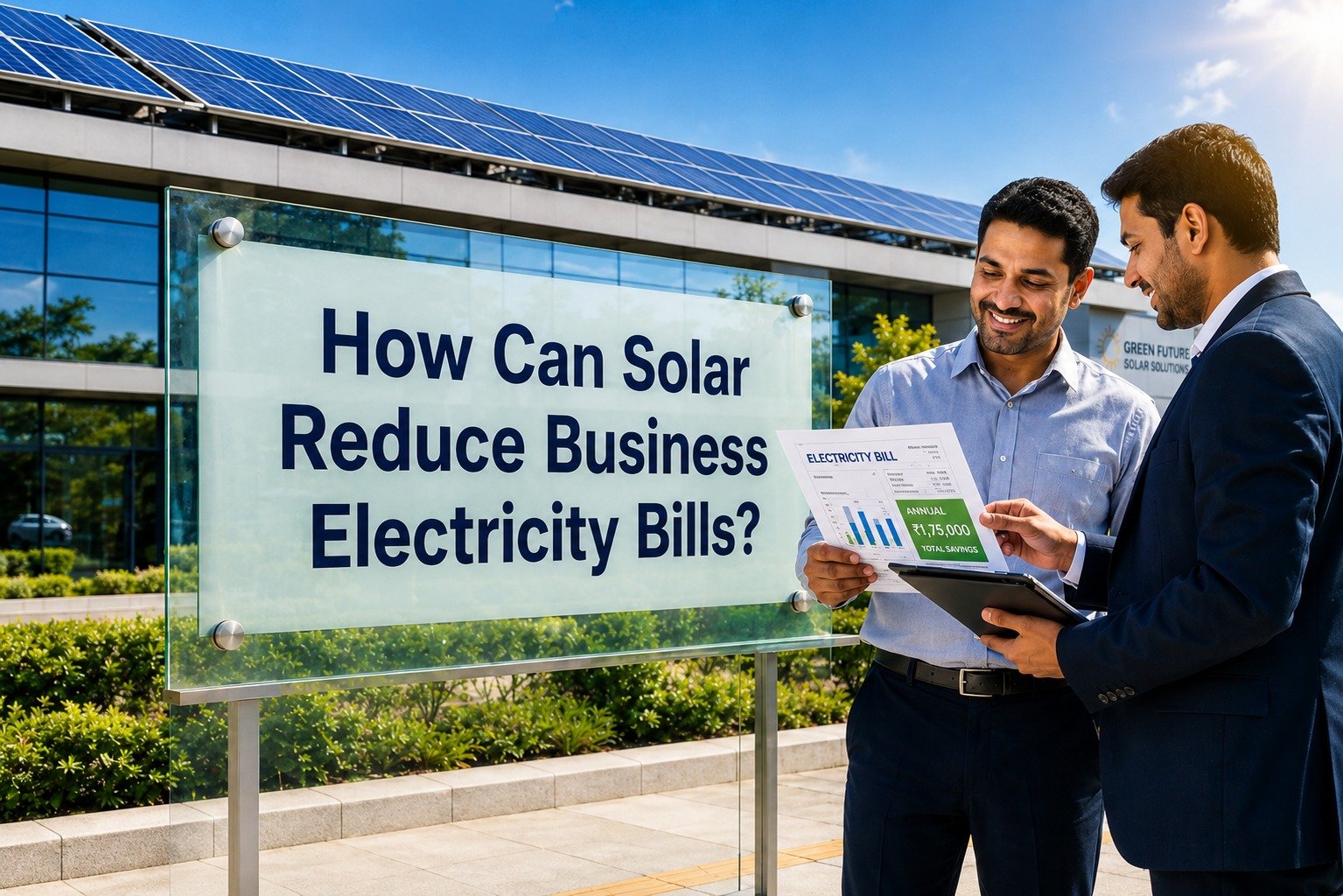
How Can Solar Reduce Business Electricity Bills?
What if your business could cut electricity bills by up to 90%—without compromising operations?
For most businesses across India, electricity is one of the biggest recurring expenses silently eating into profits. Whether you run a manufacturing unit, warehouse, hotel, hospital, shopping mall, school, or corporate office, rising power tariffs are a constant challenge. With increasing fuel costs, growing energy demand, and infrastructure upgrades, electricity prices continue to climb—putting pressure on your bottom line.
But what if you could take control of these costs?
This is where solar energy for business is changing the game. Instead of relying entirely on expensive grid power, businesses can now generate their own electricity, drastically reducing monthly bills and locking in predictable energy costs for decades.
Today's commercial solar systems are more advanced, affordable, and accessible than ever. From rooftop installations to ground-mounted and hybrid solutions, businesses can choose systems tailored to their specific energy needs.
From factories in Rajasthan to hotels in Jaipur and industrial units across India, companies are realizing that investing in commercial solar panels isn't just about sustainability—it's a powerful financial decision that boosts profitability and long-term growth.
In this guide, we'll break down exactly how solar reduces business electricity bills—and why now is the smartest time to make the switch.
How Solar Energy for Business Reduces Electricity Bills
Solar reduces business electricity bills by generating electricity from sunlight, which lowers dependence on expensive grid power. Businesses can use solar energy during working hours, reduce peak electricity usage, and benefit from net metering, resulting in lower monthly costs and long-term savings.
Ways solar reduces business electricity bills:
- Generates free electricity during daytime
- Reduces dependence on grid power
- Offsets peak-hour electricity consumption
- Earns credits through net metering
- Protects against rising electricity tariffs
Quick Benefits of Solar for Businesses:
- Lower monthly electricity costs
- Faster return on investment (ROI)
- Long-term energy savings
- Government incentives and tax benefits
- Increased business profitability
- Sustainable and eco-friendly energy solution
Why Electricity Costs Are Rising for Businesses
Businesses across India are facing steadily increasing electricity costs. Factors like growing industrial demand, fluctuating fuel prices, rising transmission expenses, and ongoing infrastructure upgrades are all driving tariffs higher. As a result, many companies are seeing pressure on their operating margins and overall profitability.
Key factors behind rising costs include the following:
- Increasing energy demand
- Higher commercial electricity tariffs
- Impact of fuel price fluctuations
- Rising operational expenses for businesses
- Expected future increases in electricity prices
Commercial users typically pay more for electricity than residential consumers. Industries such as manufacturing, warehouses, hospitals, and hotels consume large amounts of energy throughout the day, making them especially vulnerable to rising tariffs.
With energy demand continuing to grow in Rajasthan and across India, electricity prices are likely to keep increasing. Adopting solar energy can help businesses reduce dependence on the grid, protect against rising costs, and achieve greater long-term financial stability.
What Is Solar Energy for Businesses and How It Works
Solar energy for business refers to the use of solar photovoltaic (PV) systems to generate electricity for commercial and industrial operations. These systems convert sunlight into usable power, helping businesses reduce dependence on utility providers while lowering energy costs.
Key Components:
- Solar panel technology
- Inverters
- Net metering systems
- Monitoring software
- Battery storage (optional)
Types of Commercial Solar Systems:
- On-grid systems
- Hybrid systems
- Ground-mounted systems
- Rooftop solar systems
On-grid systems remain the most popular choice because they integrate with utility infrastructure and allow businesses to benefit from net metering. Hybrid systems combine solar generation with battery storage, providing additional energy security.
These systems are ideal for factories, warehouses, educational institutions, hospitals, hotels, and office buildings seeking long-term business energy savings.
How Commercial Solar Panels Reduce Electricity Bills
Businesses invest in commercial solar panels primarily to generate electricity on-site, reducing their dependence on grid power. By producing energy at the point of consumption, companies can significantly cut down on the electricity they need to purchase from utility providers.
Key benefits of commercial solar panels:
- Generate free electricity from sunlight
- Reduce reliance on the power grid
- Offset peak-hour energy usage
- Lower overall operating costs
- Improve business cash flow
During the day, solar panels generate electricity that can be used immediately to power daily operations. This direct usage helps businesses minimize grid consumption and lower monthly electricity expenses.
For example, a warehouse that operates mainly during daylight hours can use solar energy to run lighting, equipment, and HVAC systems. This reduces electricity bills while increasing overall efficiency and profitability.
Top Financial Benefits of Commercial Solar
Businesses today are increasingly viewing solar energy as a smart financial investment rather than just an alternative power source. While there is an upfront installation cost, the long-term financial benefits often far outweigh the initial expense.
Key financial benefits of commercial solar:
- Reduced Electricity Bills: Solar power significantly lowers monthly energy expenses by reducing reliance on grid electricity.
- Net Metering Credits: Excess electricity generated can be fed back into the grid, helping businesses earn credits and further reduce their bills.
- Tax Benefits and Incentives: Government policies and incentives can improve return on investment and reduce the overall cost of installation.
- Lower Maintenance Costs: Solar systems require minimal maintenance, helping businesses keep operating expenses low.
- Energy Independence: Generating your own electricity protects your business from rising tariffs and provides more predictable energy costs.
- Increased Property Value: Installing a solar system can enhance the value of commercial properties over time.
Additional financial advantages:
- Reduced long-term electricity expenses
- Lower operational and maintenance costs
- Access to government support programs
- Improved profitability
- Strong and reliable return on investment (ROI)
Unlike traditional electricity expenses that continue indefinitely, solar systems generate value for decades. Most businesses recover their investment within a few years and continue to benefit from energy savings for 20–25 years or more.
How Much Can Businesses Save with Commercial Solar?
The savings a business can achieve with solar depend on several factors, including electricity usage, system size, sunlight availability, and daily operating hours. However, most businesses see a significant reduction in their energy costs after switching to solar.
Typical savings by business type:
- Small Businesses: Retail stores and small offices can usually reduce their electricity bills by around 40–60%.
- Medium-Sized Businesses: Warehouses, schools, and commercial buildings often achieve savings of 50–75%, depending on their energy consumption patterns.
- Large Factories and Industrial Units: Businesses with high energy usage, such as manufacturing units, can reduce electricity expenses by 60–90% with well-designed solar systems.
Businesses in Rajasthan often benefit even more due to high solar irradiation throughout the year. This leads to better system performance, higher energy generation, and a faster return on investment.
Industries That Benefit Most from Solar Energy
While almost every business can benefit from solar power, certain industries see faster returns due to their high electricity consumption and daytime energy usage.
High-benefit industries include:
- Manufacturing units
- Warehouses
- Hotels
- Hospitals
- Schools and colleges
- Shopping malls
- Commercial buildings
Manufacturing units are especially well-suited for solar energy, as they typically operate heavy machinery during the day when solar power generation is at its peak. This makes solar power highly effective for reducing operational costs in factories.
Hotels and hospitals require continuous electricity, leading to consistently high energy expenses. Solar energy helps offset a large portion of these costs, improving overall efficiency and profitability.
Educational institutions, shopping malls, and commercial buildings also benefit significantly, as their peak energy usage aligns closely with daytime solar production. This alignment allows businesses to maximize solar utilization and achieve better savings.
Commercial Solar Installation Process
A successful commercial solar installation follows a well-defined process to ensure maximum energy generation and strong return on investment.
Key steps in the installation process:
- Energy assessment
- Site survey
- System design
- Proposal approval
- Installation
- Net metering setup
- System commissioning
The process begins with a detailed analysis of the business's electricity consumption and an evaluation of available rooftop or ground space. This helps determine the optimal system size and configuration.
Once the design is finalized and approved, professional installers carry out the system installation. After setup, the system is connected to the grid through net metering, allowing businesses to export excess electricity and earn credits.
After commissioning, the solar system starts generating power immediately, helping businesses reduce electricity costs and achieve long-term savings.
How to Choose the Right Commercial Solar Panels
Selecting the right commercial solar panels is essential for maximizing energy output, system reliability, and long-term financial returns. High-quality panels not only improve performance but also ensure durability over the system's lifespan.
Key factors to consider when choosing solar panels:
- Efficiency ratings
- Warranty coverage
- Durability and build quality
- Return on investment (ROI)
- Manufacturer reputation and support
High-efficiency panels generate more electricity in limited space, making them ideal for commercial rooftops where space optimization is important.
Businesses should also carefully review warranty terms, as they indicate product reliability and long-term performance assurance. Choosing a trusted manufacturer with strong support can further ensure smooth operation and maintenance over time.
By evaluating these factors, businesses can invest in a solar system that delivers consistent performance, lower energy costs, and strong long-term value.
Why Industrial Solar Power Systems Are Growing in India
The adoption of industrial solar power systems is rapidly increasing across India as businesses look for reliable, cost-effective, and sustainable energy solutions. With rising electricity prices and growing environmental awareness, solar energy is becoming a strategic investment for many industries.
Key drivers behind this growth include:
- Rising energy costs
- Increasing focus on sustainability
- Government incentives and support
- ESG (Environmental, Social, and Governance) compliance
- Competitive business advantages
Industrial businesses are recognizing that solar energy offers both financial and environmental benefits. By generating their own power, companies can significantly reduce electricity expenses and protect themselves from future tariff increases.
At the same time, adopting renewable energy helps organizations strengthen their ESG performance, enhance brand reputation, and meet sustainability goals. As a result, solar power is not just an energy solution—it's becoming a key driver of long-term business growth and efficiency.
Common Myths About Commercial Solar
Despite the growing adoption of solar energy, several misconceptions still prevent businesses from considering it as a viable solution. Understanding the reality behind these myths can help companies make more informed decisions.
Common myths about commercial solar:
- Solar is too expensive
- Solar works only in summer
- Maintenance is difficult
- ROI takes too long
- Solar panels require large land areas
The reality:
Modern commercial solar systems are more affordable than ever, with flexible financing options available for businesses. Solar panels generate electricity throughout the year, not just in summer, and can still perform efficiently even on cloudy days.
Maintenance requirements are minimal, as solar systems have no moving parts and are built for long-term use. In many cases, businesses recover their investment within a few years through energy savings.
Additionally, rooftop solar installations allow businesses to utilize existing space, eliminating the need for large land areas while still achieving significant cost savings.
Why Choose EGPS for Commercial Solar Installation?
Choosing the right solar partner is just as important as choosing the right technology. EGPS provides comprehensive commercial and industrial solar solutions tailored to business requirements.
Why Businesses Choose EGPS:
- Custom solar solutions
- Commercial expertise
- Industrial solar experience
- End-to-end support
- Professional project management
- Net metering assistance
EGPS helps businesses design, install, and manage solar projects that maximize performance and savings. From initial assessment to commissioning and net metering support, every stage is handled professionally.
Conclusion
The future of energy management is rapidly shifting toward solar power. Businesses that continue relying solely on conventional electricity remain exposed to rising utility costs and unpredictable energy pricing. In contrast, organizations adopting solar energy for business gain greater control over operating expenses, improve cash flow, and achieve stronger long-term profitability.
Whether you operate a factory, warehouse, hotel, hospital, school, shopping complex, or corporate office, investing in commercial solar panels can significantly reduce electricity bills while supporting long-term sustainability goals. Modern commercial solar installation solutions are highly efficient, reliable, and designed to deliver strong ROI with decades of energy production.
As adoption of industrial solar power systems continues to grow across India, businesses that act early can secure a powerful competitive advantage. Lower operational costs, energy independence, and sustainability leadership are becoming essential for long-term business success.
If you're ready to reduce electricity expenses and take control of your energy costs, EGPS can help you with a customized solar solution tailored to your business needs. Get in touch today for a consultation and discover how much your business can save with solar.
Frequently Asked Questions
1. How can solar energy reduce business electricity bills?
Solar energy for business reduces electricity bills by generating power directly from sunlight, which is used during peak working hours. This decreases dependence on utility electricity and significantly lowers monthly grid consumption. Over time, businesses benefit from consistent savings and protection against rising electricity tariffs.
2. Is commercial solar a good investment?
Yes, commercial solar is one of the best long-term energy investments for businesses. It reduces electricity expenses, provides predictable energy costs, and delivers strong ROI. Most businesses recover their investment within a few years and continue enjoying decades of low-cost solar power.
3. How much can commercial solar panels save annually?
Commercial solar panels can reduce energy costs by approximately 40% to 90%, depending on system size, usage pattern, and location. Businesses with high daytime consumption typically achieve maximum savings, leading to substantial annual reductions in operating expenses.
4. What is the lifespan of commercial solar panels?
Most commercial solar panels are designed to last 25 years or more. With proper maintenance and monitoring, they continue producing efficient and reliable electricity throughout their lifespan, ensuring long-term cost savings and stable energy output.
5. How long does commercial solar installation take?
A commercial solar installation typically takes a few weeks to complete after site assessment, design approval, and material procurement. Larger industrial solar power system projects may take longer depending on scale and complexity.
6. Are there government incentives for commercial solar?
Yes, government incentives and policies may support commercial solar adoption, including subsidies, tax benefits, and net metering advantages. These incentives help reduce upfront costs and improve return on investment for businesses.
7. Which industries benefit most from solar panels for commercial use?
Industries with high daytime electricity usage benefit the most, including manufacturing units, warehouses, hospitals, hotels, schools, shopping malls, and office buildings. These sectors can maximize savings through efficient use of commercial solar panels.
8. What is an industrial solar power system?
An industrial solar power system is a large-scale solar setup designed for factories and manufacturing plants with high electricity demand. It helps businesses reduce operational costs, improve energy efficiency, and ensure long-term energy independence.
9. How do I choose the right commercial solar panels?
To choose the right commercial solar panels, evaluate efficiency ratings, durability, warranty period, brand reputation, and expected return on investment. High-quality panels ensure better performance, higher energy output, and long-term reliability for commercial solar installation projects.
10. Why should businesses choose EGPS for commercial solar installation?
EGPS offers end-to-end commercial solar installation services, including system design, installation, net metering support, and maintenance. With customized solar solutions, EGPS helps businesses maximize savings, improve energy efficiency, and achieve long-term sustainability goals.