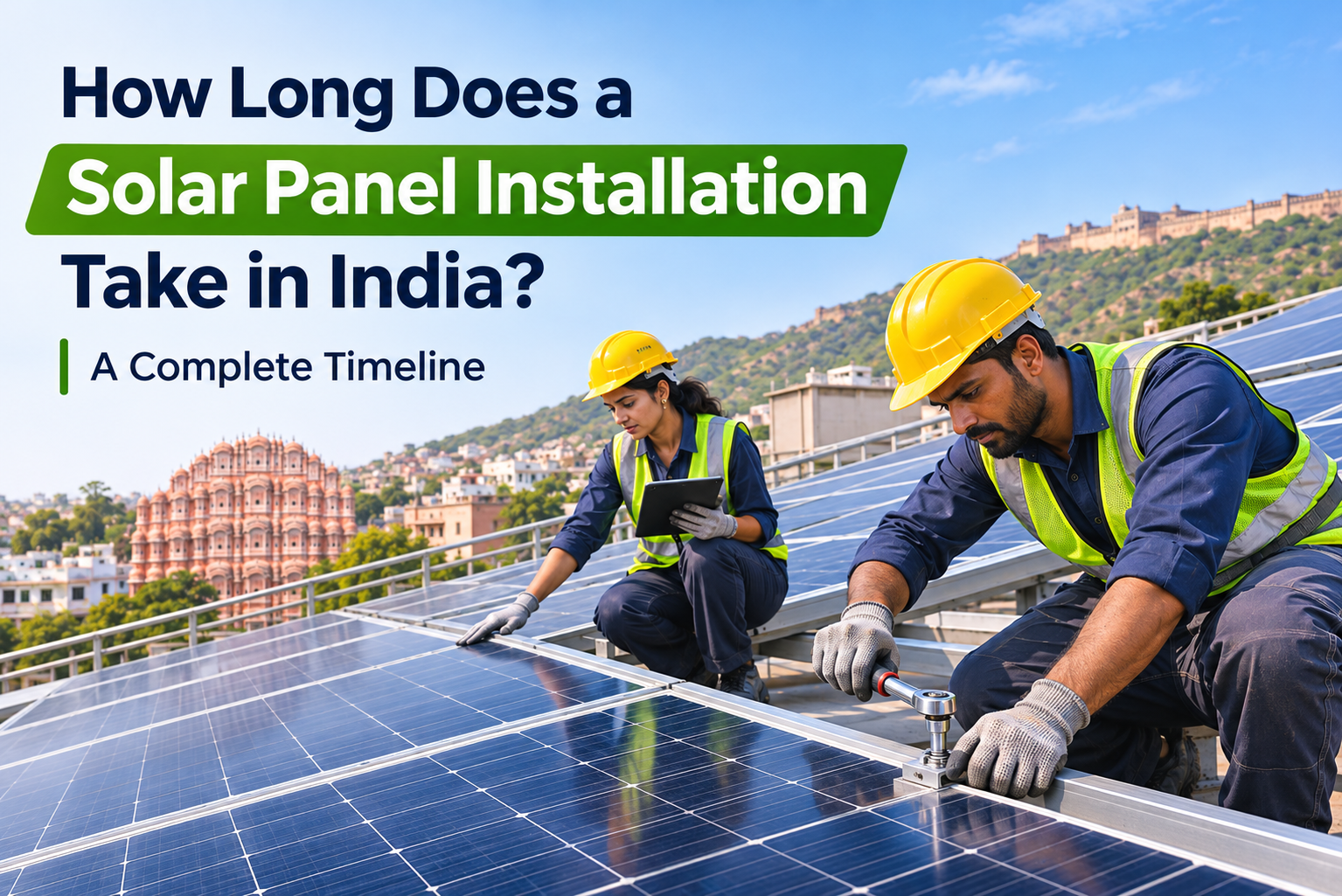
How Long Does a Solar Panel Installation Take in India? A Complete Timeline
Switching to solar energy is becoming an increasingly practical decision for homeowners and businesses across India. With rising electricity expenses, growing awareness of renewable energy and improved access to rooftop solar solutions, more property owners are considering solar panel installation to reduce their dependence on conventional electricity.
However, before investing in a solar system, one common question comes to mind: How long does solar panel installation actually take?
The answer depends on several factors, including the system's capacity, rooftop condition, installation complexity, equipment availability, and necessary electricity department approvals.
For a typical residential rooftop solar project, physical installation may take 1–3 working days once the site is ready and the required equipment is available. However, the complete process, including site assessment, system design, documentation, installation, and commissioning, can take several weeks depending on project requirements and local DISCOM procedures.
For commercial and industrial projects, the timeline can extend further depending on system capacity, structural requirements, and electrical infrastructure.
If you are considering solar panel installation in Jaipur, understanding each stage can help you plan your investment, prepare your property, and avoid unnecessary delays.
Let's explore the complete solar installation timeline in India and what you should expect at every stage.
How Long Does Solar Panel Installation Take in India?
A typical residential rooftop solar installation may require 1–3 working days for physical installation. However, the complete process, from initial consultation and site inspection to system design, documentation, equipment procurement, and final commissioning, can take several weeks depending on site readiness, project complexity, and local DISCOM procedures.
Commercial and industrial solar installations generally require more time because they involve larger system capacities, detailed engineering, structural assessments, and more extensive electrical integration.
Here is an indicative timeline:
| Installation Stage | Estimated Time |
|---|---|
| Initial consultation and requirement analysis | 1–2 days |
| Site inspection and feasibility assessment | 1–3 days |
| Solar system design and quotation | 2–4 days |
| Documentation and necessary approvals | Varies by DISCOM |
| Equipment procurement and preparation | 3–10 days |
| Residential rooftop installation | 1–3 working days |
| Commercial solar installation | Several days to a few weeks |
| Testing and commissioning | 1–2 days |
| Net metering and DISCOM inspection | Depends on local procedures |
Note: These are indicative planning estimates, not guaranteed completion periods. Some activities can happen simultaneously, while approval, equipment availability, and inspection schedules can extend the overall timeline.
The actual duration of your project will depend on its technical requirements and local electricity distribution company procedures.
Read more: Step-by-Step Process of Solar Panel Installation in India
Understanding the Solar Panel Installation Process: Step-by-Step Timeline
Solar installation involves more than mounting panels on a rooftop. It requires proper planning, electrical integration, safety checks, and system testing to ensure that the solar plant operates efficiently.
Here is how the process generally works in India.
1. Initial Consultation and Energy Requirement Analysis
Estimated time: 1–2 days
The first step is understanding your electricity consumption and determining what type of solar system is suitable for your property.
A solar installation company evaluates your requirements based on:
- Monthly electricity consumption.
- Average electricity bill.
- Available rooftop or installation space.
- Type of property, such as residential, commercial, or industrial.
- Budget and expected energy savings.
- Preference for on-grid, off-grid, or hybrid solar systems.
For example, a household with moderate electricity consumption may require a different system capacity than a commercial building operating multiple air conditioners, computers, and heavy electrical equipment.
This initial assessment helps determine the approximate solar capacity required and provides a starting point for system design.
2. Rooftop Site Inspection and Feasibility Assessment
Estimated time: 1–3 days
Once the initial requirements are understood, the next step is a technical site inspection.
This is one of the most important stages because rooftop conditions directly influence solar system design, installation time, and long-term performance.
During the inspection, the technical team evaluates:
- Available shadow-free rooftop area.
- Direction and orientation of the roof.
- Sunlight exposure throughout the day.
- Roof structure and load-bearing suitability.
- Potential shading from nearby buildings, trees, and other obstructions.
- Cable routing and inverter placement.
- Accessibility for installation and maintenance.
In Jaipur, rooftop assessment is particularly important because properties experience intense sunlight, high summer temperatures, and seasonal dust.
Solar panels should be positioned to receive adequate sunlight while allowing suitable ventilation and maintaining safe installation conditions.
A proper feasibility assessment also helps identify potential structural or electrical issues before installation begins.
3. Solar System Design and Quotation
Estimated time: 2–4 days
After the site inspection, the installation company prepares a customised solar system design.
The design considers the property's electricity consumption, available rooftop space, expected power generation, and system configuration.
It generally includes:
- Recommended solar panel capacity.
- Solar panel quantity and placement.
- Inverter capacity and configuration.
- Mounting structure requirements.
- Electrical wiring and protection equipment.
- Estimated energy generation.
- Project cost and installation requirements.
For example, a 3 kW residential solar system will have different equipment and installation requirements compared with a 10 kW commercial rooftop system.
The design must also account for future energy requirements where possible. This helps property owners choose a suitable solar system without unnecessarily oversizing or undersizing their installation.
Once the design and quotation are approved, the project can move towards documentation and execution.
4. Documentation, Permissions and Net Metering Approvals
Estimated time: Depends on the project and DISCOM
For grid-connected rooftop solar systems, certain approvals and documentation may be required before installation or grid synchronisation.
For eligible residential consumers applying under the PM Surya Ghar: Muft Bijli Yojana, the general rooftop solar application and commissioning process involves the following steps:
- Consumer Registration: Register on the official PM Surya Ghar National Portal.
- Solar Application: Submit the rooftop solar application with the required consumer and electricity connection details.
- Technical Feasibility: Complete the applicable DISCOM technical feasibility process according to the scheme guidelines.
- Vendor Selection and Installation: Select an eligible registered vendor and proceed with installation in accordance with the applicable requirements.
- Installation Details Submission: Submit the required installation details and documentation through the portal.
- Net Metering: Complete the applicable net meter application, installation, and inspection process.
- DISCOM Verification: The electricity distribution company verifies the installed system and applicable technical requirements.
- Commissioning Certificate: After successful verification, the commissioning certificate is generated through the applicable process.
The approval and inspection requirements may vary according to system capacity, consumer category, and applicable regulations. Under the applicable guidelines, certain technical feasibility requirements also differ for rooftop systems up to 10 kW.
In Jaipur, consumers should check the applicable procedures with Jaipur Vidyut Vitran Nigam Limited (JVVNL).
For official scheme information and application-related updates, visit the PM Surya Ghar National Portal.
It is important to distinguish physical installation from official commissioning. Installing solar panels on a rooftop does not automatically mean that a grid-connected system is ready for synchronisation. The applicable inspection, metering, and electrical safety requirements must be completed.
5. Equipment Procurement and Preparation
Estimated time: 3–10 days
After the design and necessary approvals, the equipment is arranged for installation.
The primary components of a rooftop solar system include:
- Solar panels: Convert sunlight into direct current (DC) electricity.
- Solar inverter: Converts DC electricity into alternating current (AC) for compatible electrical applications.
- Mounting structures: Secure solar panels to the rooftop.
- DC and AC cables: Connect different components of the solar system.
- Protection devices: Help protect the system against electrical faults and other risks.
- Earthing and lightning protection: Provide appropriate electrical safety measures.
- Net meter: Measures electricity imported from and exported to the grid, where applicable.
The time required for procurement depends on component availability, system capacity, supplier schedules, and project specifications.
For larger commercial and industrial projects, equipment preparation may take longer because of customised structures, additional electrical components, and higher-capacity inverters.
6. Physical Solar Panel Installation
Estimated time: 1–3 working days for a typical residential system
This is the stage most people associate with solar panel installation.
Once the equipment and rooftop are ready, the installation team begins the physical setup.
The process generally involves the following activities:
A. Mounting Structure Installation
The mounting structure is installed to provide a stable foundation for the solar panels. Its design depends on the roof type, panel arrangement, wind conditions, and structural requirements.
B. Solar Panel Mounting
Solar panels are carefully positioned and secured to the mounting structure. Their orientation and tilt are selected according to the site-specific design to support effective sunlight exposure.
C. Electrical Wiring
The panels are connected through suitable DC wiring. The electrical connections are routed safely towards the inverter and other system components.
D. Inverter Installation
The inverter is installed at a suitable location with adequate ventilation and protection from unsuitable environmental conditions.
E. Electrical Integration
The solar system is integrated with the property's electrical infrastructure according to the approved design and applicable safety requirements.
The installation requirements depend on rooftop accessibility, mounting structure design, system capacity, and electrical infrastructure. A straightforward rooftop setup generally involves fewer installation complications, while properties requiring structural modifications, customised mounting arrangements, or additional electrical work need more preparation.
7. Testing, Inspection and Commissioning
Estimated time: 1–2 days for installation-side testing; external inspection depends on scheduling.
After the physical installation is complete, the system must undergo appropriate testing before it is handed over for operation.
Commissioning is essential because it verifies that the installed solar system is correctly connected and functioning safely.
The testing process may include:
- Checking solar panel connections.
- Inspecting DC and AC wiring.
- Verifying electrical protection devices.
- Checking inverter configuration.
- Testing earthing arrangements.
- Reviewing system voltage and current readings.
- Checking inverter operation and monitoring functionality.
- Verifying grid synchronisation requirements for on-grid systems.
For grid-connected rooftop systems, the applicable DISCOM inspection and meter installation procedures must also be completed before official grid synchronisation.
Once the required checks are successfully completed, the system can be commissioned according to the applicable technical and regulatory requirements.
A properly tested system helps reduce the risk of electrical faults, unexpected downtime, and avoidable performance issues.
8. System Handover and Monitoring
Estimated time: Usually 1 day
After successful commissioning, the installation company hands over the solar system to the customer.
The handover process should cover:
- Basic system operation.
- Inverter status and monitoring.
- Understanding solar generation readings.
- Safety precautions.
- Routine panel cleaning and maintenance.
- Warranty and equipment documentation.
- Contact details for technical support.
Customers should understand how to monitor their solar system's performance and recognise common warning indicators.
Regular monitoring helps identify potential issues early and supports consistent electricity generation.
Read more: On-Grid vs Off-Grid Solar System: Which One is Better for Homes?
How Long Does Solar Panel Installation Take for Different System Sizes?
Solar installation time varies according to system capacity, rooftop conditions, electrical infrastructure, and project complexity.
The following table provides broad physical installation estimates for planning purposes.
| Solar System Type | Indicative Physical Installation Time |
|---|---|
| 1 kW–3 kW residential system | 1–2 working days |
| 3 kW–5 kW residential system | 1–3 working days |
| 5 kW–10 kW rooftop system | 2–4 working days |
| 10 kW–50 kW commercial system | Several days to 2 weeks |
| 50 kW–100 kW commercial system | 1–3 weeks |
| Above 100 kW industrial system | Several weeks or longer |
These are indicative estimates for physical execution, not the complete approval-to-commissioning timeline. Actual project durations depend on site conditions, manpower, equipment availability, engineering requirements, and inspection schedules.
A larger system does not always take proportionately longer to install. An organised project with a suitable rooftop, prepared infrastructure, and sufficient installation resources may progress more efficiently than a smaller project with complex site conditions.
What Factors Affect Solar Panel Installation Time in India?
Even when two customers choose the same solar system capacity, their installation timelines may differ.
Here are some important factors that influence how quickly a solar project can be completed.
1. Rooftop Size and Structural Condition
A large, accessible rooftop with sufficient shadow-free space generally makes installation easier.
However, roofs requiring additional structural reinforcement, waterproofing repairs, or customised mounting arrangements may need extra preparation.
2. Solar System Capacity
Larger solar systems require more panels, mounting structures, wiring, inverters and electrical protection equipment.
Commercial and industrial projects may also require detailed engineering and additional electrical integration, increasing execution time.
3. Equipment Availability
The availability of solar panels, inverters, mounting structures, and other components can influence the project schedule.
Delays in procurement or transportation may postpone the installation date.
4. Weather Conditions
Weather can affect rooftop installation, particularly during heavy rainfall, strong winds, or extreme heat.
Jaipur experiences high summer temperatures, which can make rooftop work more challenging during certain hours. Installation schedules may need to be adjusted to maintain worker safety and installation quality.
5. Government and DISCOM Approvals
For grid-connected installations, technical feasibility approval, documentation, net metering, and inspection requirements can influence the overall timeline.
The physical installation may be completed quickly, but the final commissioning process may take additional time depending on the local electricity department's schedule.
6. Type of Solar System
The installation requirements differ according to the selected solar configuration.
- On-grid solar system: Connects with the electricity grid and generally requires coordination for grid synchronisation and net metering, where applicable.
- Off-grid solar system: Operates independently of the electricity grid and generally requires battery storage and additional system configuration.
- Hybrid solar system: Combines grid connectivity with battery storage and requires additional electrical integration and configuration.
The selected system type can influence equipment preparation, installation, and testing time.
7. Installation Team and Project Planning
An experienced installation team with a clear project schedule can help coordinate different activities efficiently.
Proper planning, equipment readiness, site preparation, and quality checks reduce the chances of avoidable delays.
Read more: How Much Electricity Can a Commercial Solar System Generate?
How Does Solar Panel Installation Work in Jaipur?
Jaipur is a suitable location for rooftop solar adoption because of its strong sunlight availability and growing interest in renewable energy.
Residential properties, offices, commercial buildings, warehouses, and industrial facilities can all benefit from appropriately designed solar installations.
However, local conditions should be considered when planning a solar system in Jaipur.
- High summer temperatures: Solar equipment should be installed with appropriate ventilation and temperature-related design considerations.
- Dust accumulation: Dust can collect on solar panels and reduce their electricity generation. A suitable cleaning and maintenance schedule helps maintain performance.
- Rooftop exposure: The available shadow-free area and nearby buildings should be evaluated before deciding panel placement.
- Electrical infrastructure: The property's existing electrical setup should be checked to ensure compatibility with the proposed solar system.
- Local approvals: Grid-connected installations must follow the applicable DISCOM requirements for feasibility, metering, and commissioning.
What Should Jaipur Homeowners Check Before Solar Installation?
Before choosing a solar panel in Jaipur, homeowners should evaluate a few important factors to ensure the proposed system is suitable for their property.
1. Available Shadow-Free Rooftop Space
Check whether your rooftop receives sufficient unobstructed sunlight throughout the day. Nearby buildings, trees, water tanks, and rooftop structures can create shadows that affect solar panel performance.
2. Rooftop Structural Suitability
The roof should be assessed to determine whether it can safely support the proposed mounting structures and solar panels. Any structural concerns should be addressed before installation.
3. Existing Electrical Infrastructure
The property's electrical connection, distribution board, wiring arrangements, and available installation space should be checked to determine compatibility with the proposed solar system.
4. Local Electricity Distribution Company
Before applying for a grid-connected rooftop solar system, identify the electricity distribution company serving your property. Consumers in JVVNL service areas should check the applicable procedures for technical feasibility, net metering, and commissioning.
5. Dust and Seasonal Maintenance
Jaipur's dusty conditions can lead to dust accumulation on solar panels. Plan for suitable periodic cleaning and maintenance to help maintain electricity generation.
A professional site inspection helps identify these requirements before installation and supports better solar system planning.
For property owners looking for a solar system in Jaipur, working with a local installation company can simplify site assessment, project coordination, and installation planning. Evergreen Power Solar (EGPS), located on Sirsi Road, Panchyawaala, Jaipur, provides solar installation and commissioning services for residential, commercial, and industrial requirements.
Read more: How Much Does Solar Panel Installation Cost in Jaipur
What Happens During an Actual Rooftop Solar Installation?
A rooftop solar installation involves several coordinated activities, from evaluating the property to completing electrical connections and commissioning the system. At EGPS, these activities are planned according to the property's energy requirements, rooftop conditions, and selected solar system capacity.
The installation team first assesses the available rooftop area, sunlight exposure, structural suitability, and existing electrical infrastructure. Based on this assessment, the appropriate solar panels, mounting structures, and inverter configuration are finalised.
Once the site is prepared and the required equipment is available, the installation process moves forward with mounting structure setup, solar panel placement, electrical wiring, and inverter integration. The completed system then undergoes the necessary testing and commissioning checks before handover.
Example: EGPS 10 kW Commercial Rooftop Solar Installation in Jaipur
- System Capacity: 10 kW
- Project Location: Jaipur, Rajasthan
- Rooftop Type: Commercial rooftop
- Project Duration: 30 days
- Installation Work: The project included rooftop assessment, installation planning, mounting structure setup, solar panel installation, electrical connections, and system testing.
- Commissioning Status: The 10 kW rooftop solar system was successfully installed, tested, and commissioned after completion of the applicable technical checks and DISCOM procedures.
This 10 kW commercial rooftop solar project in Jaipur demonstrates how system capacity, rooftop conditions, electrical requirements, and project coordination can influence the overall solar installation timeline. The 30-day project duration reflects the reported time taken to complete the project, including the relevant installation and project-related activities.
How Can You Reduce Solar Panel Installation Time?
Although certain approvals and technical procedures cannot be skipped, customers can take a few practical steps to make the installation process smoother.
1. Keep Electricity Bills Ready
Recent electricity bills help the installation company understand your consumption and recommend a suitable solar capacity.
2. Prepare Your Rooftop
Ensure the installation area is accessible and remove unnecessary obstructions wherever possible. Any structural repairs should be identified before the installation date.
3. Finalise System Requirements Early
Discuss your expected electricity consumption, future requirements, and preferred solar configuration before approving the system design.
4. Complete Documentation on Time
Submit the necessary documents and application details promptly to avoid delays in the approval process.
5. Confirm Equipment Availability
Check whether the required solar panels, inverters, mounting structures, and electrical components are available before scheduling the installation.
6. Choose an Experienced Solar Installation Company
A professional installation partner can coordinate site inspection, system design, equipment setup, electrical integration, testing, and commissioning.
The objective should not simply be to install solar panels quickly. It should be to ensure that the complete system is safe, properly configured, and ready for reliable operation.
Read more: How to Choose the Right Size Solar System for Your Home in India
Why Choose EGPS for Solar Panel Installation in Jaipur?
Choosing the right installation partner is an important part of a successful solar project. The quality of installation, electrical integration, and commissioning directly affects system safety, reliability, and long-term performance.
Evergreen Power Solar (EGPS) provides professional solar installation and commissioning services for residential, commercial, and industrial projects.
With over five years of experience, 5,000+ customers served and more than 20 MW of rooftop solar installations, EGPS focuses on delivering practical solar solutions supported by technical execution and quality checks.
Here is how EGPS supports customers throughout the installation journey:
- Complete Installation Support: From initial consultation and site inspection to system installation and commissioning, EGPS provides support across the major stages of solar project execution.
- Customised Solar Solutions: Each project is planned according to electricity requirements, available space, rooftop conditions, and the property's specific needs.
- Professional Installation: The installation team focuses on appropriate mounting structures, electrical connections, equipment integration, and installation safety.
- Testing and Commissioning: Every installed system undergoes relevant testing and performance checks before final commissioning.
- Residential, Commercial and Industrial Expertise: EGPS supports different project requirements, from residential rooftop installations to larger commercial and industrial solar systems.
- After-Sales Support: Monitoring, maintenance, and technical assistance help customers maintain system performance over time.
Whether you are planning a residential rooftop installation or a larger commercial solar project, working with an experienced solar installation company can make the process more organised and reliable.
To understand the complete service process, explore EGPS Solar Installation and Commissioning Services.
Conclusion
Solar panel installation in India involves several stages, from the initial site assessment and system design to physical installation, testing, and commissioning. While residential rooftop installation can often be completed within a few working days, the complete project timeline depends on equipment availability, site conditions, and applicable DISCOM procedures.
If you are planning solar panel installation in Jaipur, start with a professional site assessment and a clear project plan. Choosing the right system design and an experienced installation partner helps ensure a safe, properly configured, and reliable solar solution for your property.
Planning to install solar panels in Jaipur? Connect with Evergreen Power Solar (EGPS) to discuss your energy requirements and explore a suitable solar installation solution.
Frequently Asked Questions
1. How long does solar panel installation take in India?
Physical installation of a typical residential rooftop solar system in India may take around 1–3 working days. However, the complete process, including site assessment, system design, documentation, equipment procurement, and commissioning, can take several weeks depending on project requirements.
2. How long does it take to install a 10 kW solar system?
A 10 kW rooftop solar system may take approximately 2–4 working days for physical installation under straightforward site conditions. Commercial projects with complex rooftops, additional electrical work, or structural requirements may take longer.
3. What are the different stages of solar panel installation?
Solar panel installation generally involves an initial consultation, site inspection, system design, documentation and approvals, equipment procurement, mounting structure installation, panel fitting, electrical connections, testing and commissioning.
4. Does solar panel installation require government approval in India?
Grid-connected rooftop solar installations may require applicable DISCOM procedures, technical checks, net metering arrangements, and commissioning verification. For eligible residential consumers under the PM Surya Ghar scheme, applications and related processes are handled through the official national portal.
5. How long does solar panel installation take in Jaipur?
Physical installation of a typical residential rooftop solar system in Jaipur may take around 1–3 working days. The complete project timeline depends on rooftop conditions, equipment availability, documentation, and applicable JVVNL procedures.
6. What factors can delay solar panel installation?
Common factors include unsuitable rooftop conditions, structural modifications, limited installation space, equipment availability, additional electrical work, documentation requirements, and delays in DISCOM inspection or net metering procedures.
7. Can solar panels be installed in one day?
Yes, smaller and straightforward rooftop solar systems may sometimes be physically installed within one day. However, larger systems or projects requiring additional structural and electrical work generally need more time. Testing and commissioning may also take additional time.
8. How long does it take to install a 5 kW rooftop solar system?
A 5 kW residential rooftop solar system may generally require around 1–3 working days for physical installation. The actual duration depends on roof accessibility, mounting arrangements, electrical infrastructure, and site readiness.
9. How long does it take to complete solar panel testing and commissioning?
Testing and commissioning may take around 1–2 working days, depending on the system configuration and required technical checks. For grid-connected systems, applicable DISCOM inspection, metering, and approval procedures may extend the overall timeline.
10. How can I find a reliable solar installation company in Jaipur?
Look for a solar installation company with relevant project experience, qualified installation professionals, transparent quotations, suitable equipment options, and support for applicable documentation and commissioning procedures. EGPS provides solar installation and commissioning services for residential, commercial, and industrial requirements in Jaipur.